
NORTHERN LIGHTS: THE ZIEGLER POLAR EXPEDITION, 1903-1905
By Catherine Ortega
Finished and coming eventually (currently seeking publisher or agent)
 GENRE: Historical fiction
NUMBER OF WORDS: ~191,000
SYNOPSIS
During the late 1800s and early 1900s, when society held explorers in high esteem, several wealthy men privately funded expeditions in an elite race to reach the Earth’s poles. William Ziegler, famed “king” of Royal® baking powder, funded the Ziegler Polar Expedition of 1903, with some financial support from the National Geographic Society. Ziegler selected Anthony Fiala as Commander. He aspired to be a great leader, but he immediately faced resistance, antagonism, and criticism by some of the men from the Field Department, consisting primarily of physicians and scientists, accustomed to the privileges of high society and having their way. The same men also openly criticized the gruff and often intoxicated captain, Edwin Coffin, and his puppet First Officer. On an earlier expedition, Fiala witnessed the catastrophic discord between the Commander and Captain; he vowed to maintain a functional relationship with Coffin so refused to confront the Captain about his drinking.
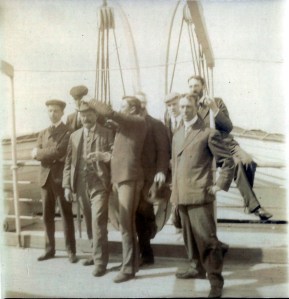 After more than six weeks of bucking through thick ice in the Barentz Sea, they arrived at their base camp, Rudolf Island, the northernmost island in the Franz Josef Land archipelago. The men in the Field Department insisted the ship should remain at Rudolf Island, but Captain Coffin advised a safer harbor amid one of the southern islands. The men of the Field Department won the battle: the ship remained at Rudolf Island. After a terrifying ice floe fatally crushed their ship in the fall of 1903, the ship’s crew, who had used the ship as their living quarters, had to crowd into a small on-shore house with the members of the Field Department. The subsequent struggle between these disparate classes of society fueled the fires of their mutinous spirits.
In the spring of 1904, 26 of the 39 men set out to achieve their goal of the North Pole, or at least break the previous record of 86° 34′ N set by Captain Umberto Cagni in 1900. The weakest man defined the strength of the team, and injuries to the men as well as equipment failure and impassable ice conditions forced them to turn back to their home base on Rudolf Island. Fiala blamed their failure on lack of moral fiber of the men. The men blamed their failure on Fiala.
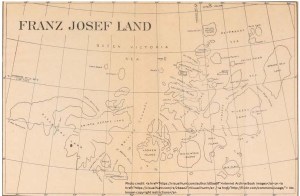 With the disappearance of their ship, the only hope of returning home relied on success of the relief ship, scheduled to arrive at Cape Flora on the southern side of the archipelago during the summer of 1904. Fiala led the men on a 150-mile trek across the islands to meet the relief ship. As they waited, the scientists and sailors lived under different roofs, cooperating only enough to survive. The ice held fast to the Barentz Sea throughout the summer. They hopelessly watched the summer and chance of rescue disappear. Supplies left by previous expeditions, wild game, and discovery of a coal source helped them survive the winter.
 In the spring of 1905, Fiala led a smaller party of ten men toward the pole. The ice conditions on the Arctic Ocean, even less favorable than the year before, impeded their progress. Had they gone farther, they would not have survived. Throughout their two years in Franz Josef Land, inherent dangers of the Arctic constantly taunted them: close encounters with polar bears, hypothermia, frost bite, deep crevasses, and menacing icebergs. What they viewed as shame-faced failure marred the elation of their rescue in the late summer of 1905.

 Catherine Ortega